Key Takeaways
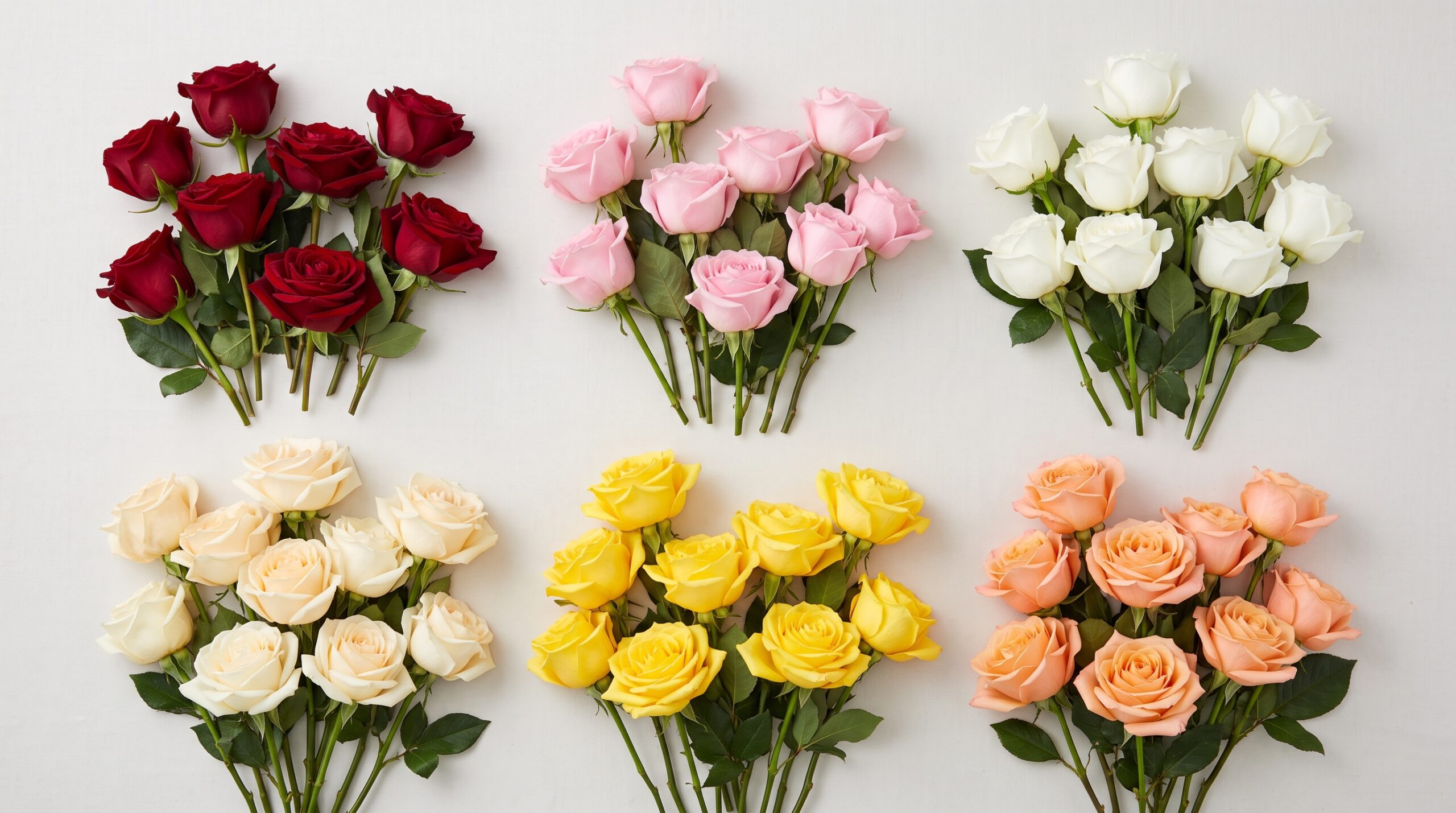
- Deep red says romantic love and nothing else. Do not send it to a colleague, a relative or a friend.
- Pink is the most useful colour in the shop. It carries warmth and affection without declaring anything.
- White means sincerity, respect and new beginnings, and also carries funeral associations in Nigeria. Pair it with pink or peach unless the occasion is sympathy.
- Yellow is the one that still causes trouble here. Internationally it means friendship. Among older Nigerian recipients it can still suggest jealousy or infidelity.
- Orange and coral say enthusiasm and admiration, and are the safest bright colour for a new relationship.
- Mixed roses mean celebration, not romance. They are right for birthdays and wrong for anniversaries.
Why colour matters more than people think
The flowers arrive before the card is read. That is the whole reason colour matters.
A recipient sees the bouquet, forms an impression in about two seconds, and then reads your message through that impression. If the colour and the message disagree, the colour usually wins, because it registered first and it is not language.
That is why a dozen deep red roses with a card saying thank you for your help on the project creates confusion rather than gratitude. The flowers said something the card then contradicted.
Rose colour meanings are partly universal and partly local, and the local part is where people get caught out. Most of what is written about this online is written for a British or American audience, and two of the colours mean something different enough in Nigeria to matter.
This guide covers what each colour communicates to a Nigerian recipient, which combinations work, where the international advice is wrong for this market, and the practical side of colour that nobody mentions, which is how each one actually survives Lagos heat.
Where meaning is contested, I have said so rather than pretending there is a single answer.
Red: romantic love, unambiguously
Deep red is the most heavily loaded colour in the shop and the least flexible.
It means romantic love. Not affection, not warmth, not gratitude. In Nigeria, as in most places, a deep red rose is read as a romantic statement regardless of the context it arrives in.
This is useful when that is what you mean. For an anniversary, a proposal, a Valentine’s gift or a declaration, nothing else carries the same weight and no card is required to explain it.
It is a problem everywhere else. Red roses to a colleague of the opposite sex create an awkward situation no card can fix. Red roses to a mother or sister read oddly even though the sender meant only affection. Red roses to somebody you have been on two dates with can feel like a commitment they have not made.
The shade matters within red. Deep burgundy and darker reds read as more mature and more serious, and suit a long marriage. Bright scarlet reads as newer, more passionate, slightly younger.
A single red rose is its own statement and is read as sincere rather than cheap, particularly when it is well presented. A dozen is the conventional declaration. A hundred is a grand public gesture and should be treated as such.
One local note. In Lagos, red roses are so strongly the default gift that sending them can occasionally read as unimaginative to a recipient who receives them annually. If you have sent red every February for a decade, the colour has stopped carrying information and something else would say more.
Looking for inspiration? Browse our Red roses or see Pink roses.
Pink: the most useful colour there is
If you take one practical thing from this page, it is that pink solves more problems than any other colour.
Pink means affection, gentleness, gratitude and admiration. It is warm without being a declaration, which makes it the right choice for the enormous number of situations that are not romantic but are not formal either.
Light pink reads as sweetness, admiration and grace. It suits a new relationship where red would be too much, a thank you that is genuinely warm, and a gift to a mother or sister.
Deep pink reads as gratitude and appreciation with more energy. It is the colour for thank you, well done and congratulations.
Pink is also our most common apology colour, and for good reason. It offers warmth while leaving the recipient room to still be annoyed, which is exactly what an apology should do. Red in that situation presumes a reconciliation that has not happened yet.
Pink works for a woman of any age, which is not true of every colour, and it works across family, friendship and romance without ever being wrong.
The only place pink underperforms is a formal corporate setting, where white or cream is better, and a grand romantic gesture, where red carries more weight.
White and cream: sincerity, respect, and a caution
White means purity, sincerity, respect, new beginnings and remembrance. It is the most formal rose colour and the most versatile in serious situations.
It is correct for weddings, for christenings and naming ceremonies, for a formal thank you, for a corporate gift, and for a new year or new venture.
It is also the colour of sympathy in Nigeria, for both Christian and Muslim families, and that is the caution. An all white arrangement arriving unexpectedly can be read as a condolence by a recipient who was not expecting one, particularly an older recipient.
The fix is simple and we apply it as standard. Pair white with pink, peach or strong green unless the occasion genuinely is sympathy. A white and blush arrangement reads as elegant. An all white one reads as formal and, in the wrong context, as mourning.
Cream and ivory are softer than pure white and carry less of the funeral association. They read as mature, warm and considered, and they are our usual recommendation for an apology to a wife of many years, where pink can feel a little young.
White roses are also the strongest choice for a new year gift, where the new beginnings meaning does real work, and for a business opening for the same reason.
Yellow: where the international advice is wrong here
This is the colour most worth reading carefully, because the standard advice is unsafe in Nigeria.
Internationally, yellow roses mean friendship, joy and warmth. Most guides will tell you this and stop there.
In Nigeria the older association has not fully disappeared. Among some recipients, particularly older ones, yellow roses carry a suggestion of jealousy, a fading relationship or infidelity. That meaning is historical and is weakening, but it is still live enough that we warn customers about it.
The practical rule we give is this. Yellow is fine, and often lovely, for a friend, a colleague, a celebration or a get well gift. Avoid it for a romantic partner, particularly one older than about forty, unless you know she likes yellow.
Yellow works well in January as a new year gift, where it reads as prosperity and light rather than anything else, and it suits a business congratulation.
Yellow mixed into a bright multicolour bouquet carries none of the risk, because the bouquet reads as celebration rather than as a yellow statement.
If you are unsure, send orange or coral instead. They occupy similar emotional territory with none of the ambiguity, which is why we often suggest them.
Orange, coral and peach
The colours people overlook, and frequently the right answer.
Orange means enthusiasm, energy, desire and fascination. It is warmer than friendship and less committed than red, which makes it genuinely useful in a new relationship where red would be too much and pink feels too gentle.
Coral sits between orange and pink and is one of the most flattering colours in a bouquet. It reads as modern and considered rather than conventional.
Peach means sincerity, gratitude and modesty. It is a mature, soft colour that suits a thank you with real feeling behind it, and it is excellent for an apology.
All three are strong choices for a woman who receives red roses every year and has stopped noticing them. Sending peach or coral is a small signal that you thought about it rather than defaulting.
They also photograph beautifully, which matters more than most senders realise given how often a bouquet is photographed before it is put in water.
The only caution is that orange can look brash in a very large arrangement. It works best as the dominant colour in a modest bouquet or as an accent in a larger one.
Lavender, burgundy and the unusual colours
Lavender and purple roses mean enchantment, admiration and love at first sight. They are unusual enough in Lagos that sending them signals effort. They suit a romantic gesture that wants to be distinctive rather than conventional.
Burgundy and very dark red mean deep, unconscious beauty and a settled love. These are the roses for a long marriage, and they read as more serious than bright red.
Green roses, which are a genuine variety rather than dyed, mean renewal and abundance. Rare here and striking in an arrangement.
Blue roses do not exist naturally. Any blue rose you see has been dyed or treated, and it is worth knowing that before you pay a premium for something described as rare. We will always tell a customer when a colour is dyed.
Black roses do not exist either. What is sold as black is a very deep burgundy, and in a dark room it reads as near black. They carry a dramatic, sometimes funereal meaning and should be chosen deliberately.
Rainbow roses, which are dyed through the stem, are a novelty. Some recipients love them, particularly younger ones. They are not a romantic gift and should not be sent as one.
Combinations and what they say
What happens when you mix colours, which is where most arrangements actually sit.
- Red and white together. Unity and togetherness, which is why it is a classic wedding and anniversary combination. In Nigeria it also reads as festive at Christmas.
- Pink and white. Elegant, gentle, appropriate for almost anything. Our most frequently made combination and the safest beautiful choice.
- Red and pink. Romantic with warmth. Softer than all red and it suits an anniversary better than a proposal.
- Peach, cream and blush. Mature, considered, understated. The combination for a woman with taste who has received plenty of red roses.
- Bright multicolour. Celebration. Right for birthdays, graduations, promotions and new babies. Wrong for apologies, sympathy and anniversaries.
- White and green only. Formal and professional. The corporate default and the right choice for a reception desk.
- Yellow and orange together. Cheerful friendship with none of the yellow ambiguity, because the bouquet reads as a celebration rather than a statement.
- A single colour in volume. Any colour sent as fifty or a hundred stems of one shade reads as deliberate and significant, which is why single colour arrangements dominate at the top of the price range.
The practical side of colour
Meaning is only half the decision. How a colour behaves in Lagos is the other half, and nobody writes about it.
Pale colours show damage more. A cream or white rose with a bruised outer petal or a touch of heat stress looks visibly imperfect. The same damage on a deep red rose is nearly invisible.
White marks easily. Harmattan dust, a splash of water, a fingerprint. In December and January a white arrangement near an open window shows the dust within a day.
Deep reds hold their colour as they age. Pale pinks and creams can go slightly brown at the edges as they finish, which is more noticeable.
Bright colours photograph differently under Lagos light. Reds and oranges hold up in strong sunlight. Pale pinks wash out almost completely in direct sun, which matters for an outdoor event or a photograph taken at midday.
For an outdoor gathering in Lagos, choose deeper colours. For an air conditioned indoor setting where the arrangement will be looked at closely, pale colours reward the attention.
One practical note that cuts across every colour. Darker roses show heat damage less visibly than pale ones, which means a cream or white rose that has had a hard journey looks worse than a red one in the same condition. Oklahoma State University Extension’s fact sheet on cut flower care and handling sets out why heat and dehydration do what they do to a cut stem, and in Lagos that is worth understanding before you choose a pale variety for an outdoor event.
How to choose in thirty seconds
A decision shortcut, since most people are choosing quickly.
If it is romantic and you mean it seriously, deep red.
If it is romantic and new, pink, coral or orange.
If it is warm but not romantic, pink.
If it is an apology, soft pink, peach or cream. Never deep red.
If it is formal, professional or a new beginning, white and green.
If it is sympathy, white, and send fast.
If it is a celebration, bright mixed.
If it is a friend, yellow, orange or sunflowers.
If she has received red every year for a decade, send peach or coral and watch what happens.
And if you genuinely do not know, pink. It is the colour that is never wrong, and in a shop full of options that is worth more than it sounds.
Colour by occasion, at a glance
A reference table in prose, since this is what most people actually came for.
- Anniversary. Deep red, or burgundy for a long marriage. Red and white together for a milestone.
- Proposal. Deep red, in volume. This is the one occasion where quantity genuinely carries meaning.
- Valentine’s Day. Red if the relationship is established. Pink or coral if it is new, where red can read as a declaration she has not made.
- Birthday. Bright mixed, or her favourite colour if you know it. Using a colour she has mentioned is worth more than any amount of stems.
- Apology. Soft pink, peach or cream. Never red, never bright.
- Thank you. Deep pink or peach, which carry gratitude with warmth.
- Congratulations. Bright mixed, or yellow and orange for energy.
- New baby. Soft pink, white or lemon, and send for the mother rather than only the baby.
- Get well. Yellow, orange or bright mixed. Cheerful is correct here and sombre is not.
- Sympathy. White, and send quickly.
- Corporate. White, cream and green. Nothing that could be read as romantic.
- Mother or grandmother. Mixed soft colours or lilies rather than red roses, which read as romantic even within a family.
- Just because. Whatever she likes. The absence of an occasion is already the message, so the colour only has to please her.
Where meaning is contested
An honest note to close, because a lot of flower meaning writing states things with more confidence than they deserve.
Rose colour meanings are a mixture of Victorian floriography, commercial tradition built by the flower trade itself, and local custom. They are not fixed, they are not universal, and in some cases they were invented to sell flowers.
What is genuinely consistent across almost everywhere is red for romantic love and white for sincerity and mourning. Those two are reliable.
Everything else is softer than the guides suggest. Yellow is the clearest example, meaning friendship in one market and something considerably less welcome in another.
What matters more than any chart is what the recipient herself believes, and what she has received before. A woman who has always loved yellow roses is not going to apply the older Nigerian association to a bouquet from her husband.
So use this page as a starting point rather than a rulebook, and when you know something specific about her, let that override everything written here. The whole purpose of choosing a colour carefully is to say something personal, and a chart cannot know her.
Ready to send? Shop Red roses, or order with Mixed roses.
Frequently Asked Questions
What do red roses mean?
Romantic love, unambiguously. Deep red is read as a romantic statement regardless of context, so it is right for anniversaries, proposals and declarations and wrong for colleagues, relatives and friends. Darker burgundy reads as more settled and mature, bright scarlet as newer and more passionate.
What do yellow roses mean in Nigeria?
Internationally yellow means friendship and joy, but in Nigeria an older association with jealousy or infidelity has not fully disappeared, particularly among recipients over about forty. Yellow is fine for friends, colleagues and celebrations. Avoid it for a romantic partner unless you know she likes it.
What colour roses should I send for an apology?
Soft pink, peach or cream. These offer warmth while leaving the recipient room to still be annoyed, which is what an apology should do. Avoid deep red, which presumes a reconciliation that has not happened yet, and avoid bright multicolour, which reads as tone deaf.
Are white roses appropriate for a happy occasion?
Yes, but pair them with pink, peach or strong green. White carries sincerity, respect and new beginnings, and it is also the sympathy colour in Nigeria for both Christian and Muslim families. An all white arrangement arriving unexpectedly can be read as a condolence.
What do pink roses mean?
Affection, gratitude, admiration and gentleness. Light pink reads as sweetness and grace, deep pink as appreciation with more energy. Pink is the most useful colour in the shop because it carries warmth without declaring anything, and it is never the wrong choice.
Do blue or black roses exist?
No. Any blue rose has been dyed or treated, and what is sold as black is a very deep burgundy that reads as near black in low light. Both are legitimate products, but know what you are buying before paying a premium for something described as naturally rare.
What do mixed colour roses mean?
Celebration rather than romance. Bright multicolour arrangements are right for birthdays, graduations, promotions and new babies, and wrong for apologies, sympathy and anniversaries, where a single colour or a considered pairing says far more.
Summary
The flowers arrive before the card is read, so when colour and message disagree, colour wins. That is the whole reason this matters.
Deep red means romantic love and nothing else. Pink is the most useful colour there is, carrying warmth without declaring anything. White means sincerity and new beginnings but also sympathy here, so pair it unless mourning is the occasion.
Yellow is where international advice fails in Nigeria. The older association with jealousy has not fully gone, particularly among older recipients, so send orange or coral instead when you want warmth without ambiguity.
Peach, coral and lavender are the underused colours, and they are the strongest choice for a woman who has received red roses every February for a decade and stopped noticing.
And the practical half nobody writes about: pale colours show heat damage and harmattan dust, deep colours hold up outdoors and in strong Lagos light. Choose for the setting as well as the sentiment.
Leave a Reply