
Key Takeaways
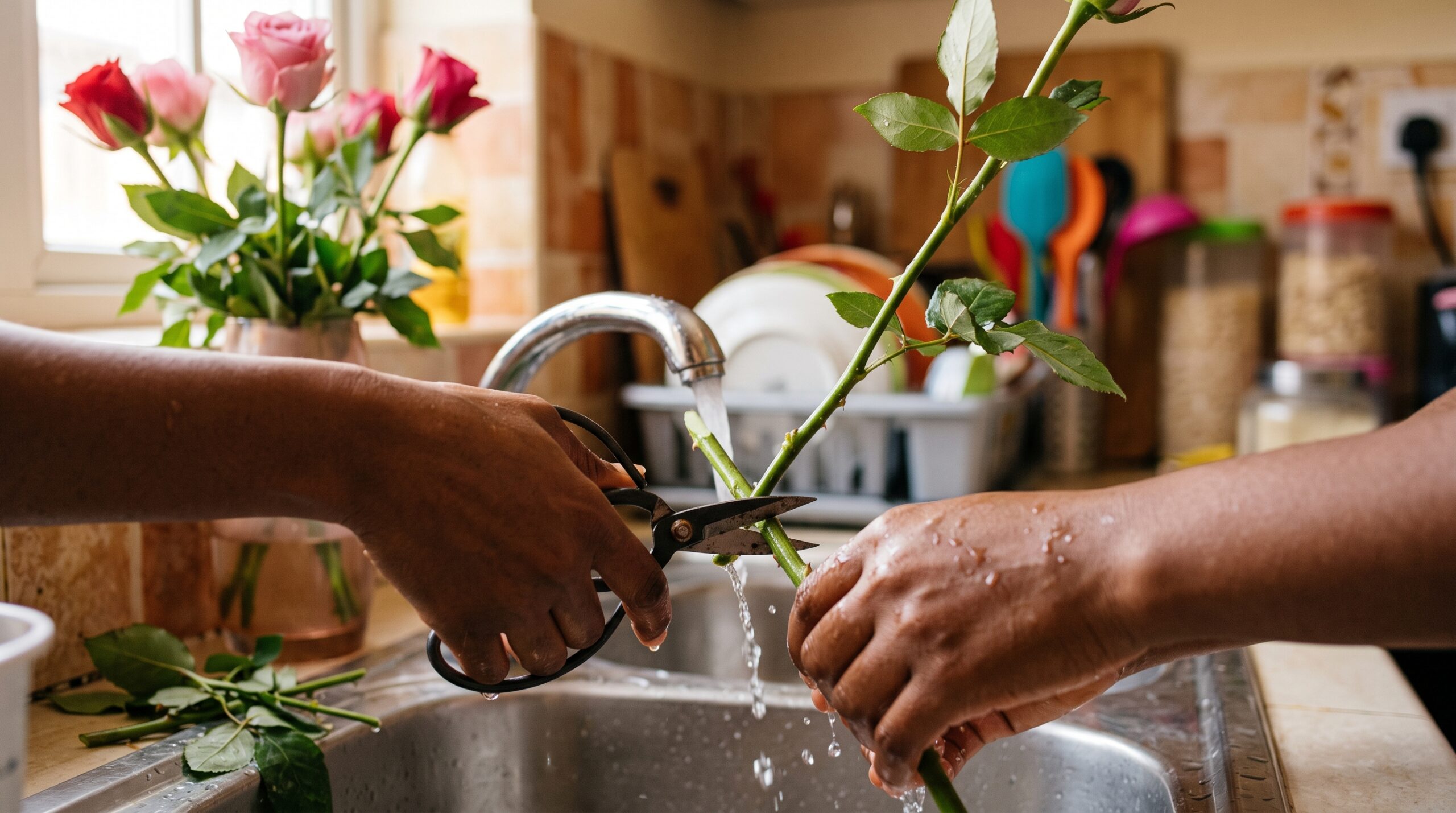
- Cut an inch off every stem under running water before the flowers go in the vase. This one step adds days.
- Keep them away from the fruit bowl. Ripening fruit releases ethylene, which ages flowers faster than heat does.
- Cool room, no direct airflow. Air conditioning helps, but the draught from a vent dehydrates petals quickly.
- Change the water every two days in harmattan and every three the rest of the year, trimming the stems each time.
- Expect eight to ten days with proper care. If a bouquet dies in three, the handling failed before it reached you.
- Strip every leaf that would sit below the waterline. Submerged leaves rot and foul the water within a day.
Why Lagos is harder on flowers than most places
A cut flower is a living thing running on a fixed reserve. From the moment it is cut it is using up stored energy and losing water through its petals, and everything you do either slows that down or speeds it up.
Lagos speeds it up in three specific ways.
Heat is the obvious one. Biological processes run faster as temperature rises, so a flower in a thirty degree room is ageing noticeably faster than the same flower at eighteen. There is no trick that cancels this, only habits that compensate.
Harmattan is the one people miss. From roughly December to February, dry air moves down from the Sahara and humidity drops sharply. A flower loses water through its petals continuously, and dry air pulls it out faster. Harmattan is harder on cut flowers than the wet season heat, which surprises most people.
And the power situation shapes the third. Rooms swing between air conditioned and not, repeatedly, through a single day. That cycling between cool still air and warm still air is more stressful for a bouquet than a steady moderate temperature would be.
None of this means flowers do badly here. Properly handled, a bouquet runs eight to ten days in Lagos, which is a respectable life anywhere. It means the margin for error is smaller, and the habits matter more.
The first hour decides everything
More of a bouquet’s lifespan is determined in the sixty minutes after it arrives than in the whole week that follows.
When a stem is cut, air is drawn into the channels that carry water up to the flower. That air forms a blockage. The flower can then be sitting in a full vase and still dehydrating, which is why people are puzzled when a bouquet in water droops anyway.
The fix takes about thirty seconds per stem and almost nobody does it.
The mechanism is well documented and worth reading if you want the detail. Oklahoma State University Extension’s fact sheet on the care and handling of cut flowers explains that an air blockage drawn into the stem at cutting is cleared by removing an inch of stem under water, and that ethylene given off by ripening fruit and by ageing flowers damages blooms nearby at concentrations as low as a hundred parts per billion. Those two facts explain most of what follows on this page.
So, concretely, within the first hour: run the tap, hold each stem under the running water, cut about two and a half centimetres off at a sharp angle with scissors or a knife, and put it straight into the vase. The angle matters because a flat cut can sit against the bottom of the vase and seal itself.
Do this even if the bouquet arrived in a hydration wrap. The wrap keeps the stems alive in transit. It does not clear the blockage.
Looking for inspiration? Browse our Red roses or see Same day flower delivery in Lagos.
Setting the vase up properly
The vase is the flower’s entire water supply for a week, and most people get it wrong in small ways.
Start with a clean vase. Bacteria is the second great blocker of stems after air, and a vase that held flowers a fortnight ago and was rinsed rather than washed is full of it. Wash it properly with soap.
Use cool water, not cold, and fill it to about two thirds. Deep water supports long stems and gives you margin before it runs low.
Strip every leaf that would sit below the waterline. Submerged leaves rot within a day, the water turns cloudy and smells, and the whole bouquet goes over fast. This is the most common mistake we see and it is entirely avoidable.
Use the flower food if one came with the bouquet. It is not a gimmick. It contains a sugar for energy, an acidifier to help water uptake and a biocide to slow bacteria. Use the whole sachet in the right volume of water rather than sprinkling some in.
If you have no flower food, half a teaspoon of sugar and a few drops of bleach in a litre of water approximates it. The bleach is doing the important work. Do not skip it and do not overdo it.
Give the stems room. A bouquet crammed into a narrow vase has no airflow between the blooms, and in humid Lagos months that invites grey mould, which spreads through a tightly packed bouquet in a day.
Where to put them, and where not to
Placement does more than any product you can buy.
The best spot is a cool room out of direct sun, away from any vent, and away from the kitchen.
Direct sunlight through a window is the fastest way to lose a bouquet. A windowsill feels like the natural place for flowers and in Lagos it is close to the worst.
Air conditioning is the counterintuitive one. Cool air is good, moving air is not. A bouquet sitting in the direct stream from a vent is being actively dried, and people place flowers there deliberately thinking they are helping. Cool the room, keep the flowers out of the draught.
Fans are the same problem, more so.
Keep them away from the kitchen. Cooking heat, and more importantly the fruit bowl, both shorten life.
Away from electronics that give off heat, which includes the top of a television or a decoder.
And in harmattan, away from open windows, because the dust that settles on petals ages an arrangement visually long before it ages biologically.
The fruit bowl problem
This deserves its own section because it is invisible and it is genuinely significant.
Ripening fruit gives off ethylene gas. Ethylene is a plant hormone that triggers ageing, and cut flowers are extremely sensitive to it. A bouquet sitting next to a bowl of bananas is being told, chemically and continuously, to get old.
The effects are a bouquet that opens too fast and then collapses, petals dropping early, and buds that never open at all.
Bananas are the worst offenders, followed by avocados, mangoes and apples. A Nigerian kitchen in season is a difficult place for flowers.
Ageing flowers produce ethylene too, which is why one dying stem in an arrangement accelerates the rest. Pull out anything that has gone over rather than leaving it in to look full.
The fix costs nothing. Put the flowers in a different room from the fruit, or at minimum two metres away and not downwind of it. Customers who start doing this consistently report a noticeable difference, and it is the single easiest win in flower care.
The ongoing routine
What to do across the week, which takes about five minutes every other day.
- Change the water every three days normally, and every two days during harmattan or any very hot spell. Do not top up, replace. Topping up leaves the bacteria in place.
- Re-trim the stems each time you change the water, a centimetre, at an angle, under running water. Stems seal over and this reopens them.
- Wash the vase at each change, not just rinse.
- Add flower food each time if you have more sachets, or remake the sugar and bleach solution.
- Remove anything that has gone over, immediately. One dying stem ages the whole arrangement.
- Mist the foliage in the morning during harmattan, never the blooms. Leaves benefit from humidity. Petals mark and spot, and roses show it badly.
- Dust the leaves gently with a dry cloth during harmattan months.
- Move the arrangement to the coolest room overnight if your house gets hot, which buys real time across a week.
Troubleshooting
What a symptom actually means, which tells you whether it is fixable.
Drooping heads within a day or two. Almost always an air blockage or dehydration before arrival. Re-cut the stems under water and put them in deep water in a cool room for a few hours. Roses frequently recover from this completely.
A bent neck on a rose, where the head flops at the top of the stem. The classic air blockage. Re-cut under water, and if it persists, submerge the whole rose including the head in cool water for about twenty minutes. This works more often than people expect.
Browning petal edges. Heat damage, usually from transit or a hot room. Not reversible, but you can slow further loss by moving to somewhere cooler and out of any draught.
Cloudy, smelly water after a day. Leaves below the waterline. Change the water, wash the vase, strip the leaves, re-trim.
Buds that never open. Usually ethylene exposure, which means fruit nearby, or stems cut too immature.
Grey fuzzy mould on petals in the wet season. Botrytis. Remove affected blooms immediately, improve airflow around the arrangement, and keep misting away from petals.
A whole bouquet gone in three days despite doing everything right. That is a handling failure before it reached you, not something you caused. Tell your florist, with a photograph taken the same day.
What good handling looks like before you get them
Half of a bouquet’s life is decided before you ever see it, so it is worth knowing what should have happened.
Cold chain from arrival. Stems flown in from Kenya or Ethiopia should go into a cold room immediately, not stand in a warm room while somebody gets to them.
Conditioning. Stems cut at an angle under water, lower leaves stripped, and left to drink in clean water for several hours before anything is arranged. This is the step that decides eight to ten days versus three, and it is invisible to you.
Arranging on the day of delivery rather than the night before.
Transport upright, supported, in water or a hydration wrap, in an air conditioned cabin rather than a boot. A Lagos car boot at midday exceeds fifty degrees and flowers laid flat in one are cooked, with the damage only showing two days later.
Morning delivery routing, because afternoon heat and afternoon traffic compound each other.
Ask your florist about these before you order. The ones who do this work answer immediately and in detail, because it is the part they are proud of. And this is why the day six test matters more than the day one impression: anybody can hand over a bouquet that looks good at the door.
Care by flower type
General advice covers most of it, but a few flowers behave differently enough to be worth naming.
- Roses. The most likely to suffer an air blockage, and the most recoverable. Re-cut under water at the first sign of a bent neck. Remove the outer guard petals, which growers leave on deliberately to protect the bloom and which often look bruised. The rose underneath is untouched.
- Lilies. Remove the pollen anthers as the flowers open. The pollen stains fabric permanently and shortens the bloom’s life. Lilies also drink heavily, so check the water daily.
- Chrysanthemums. The most forgiving flower we sell and the best choice for a hot room or a household that will not follow a routine. They tolerate Lagos conditions better than anything else.
- Hydrangeas. The most demanding. They take water through their petals as well as their stems, so misting genuinely helps here when it does not elsewhere. They wilt fast in heat and are a poor outdoor choice in Lagos.
- Gypsophila. Nearly indestructible and often outlasts everything around it. Worth keeping when you strip out spent blooms.
- Orchids. Not a cut flower in the usual sense. Water sparingly, never let the roots sit in standing water, and keep out of direct sun. Overwatering kills far more orchids in Lagos than neglect does.
- Sunflowers. Heavy heads on thick stems, so they need deep water and a vase that will not tip. They also foul water faster than most, so change it every two days.
Reviving a bouquet that has had a hard day
Flowers that arrive tired, or that you forgot in a hot car, are not always finished.
Start with a full re-cut. Two or three centimetres off every stem, under running water, at a sharp angle. Be more generous than usual, because the lower part of a dehydrated stem is often blocked along its length.
Then deep water, cool, in a clean container, and leave them somewhere cool and dark for two to three hours. Dark matters, because it slows the flower down while it rehydrates.
For roses specifically, if a head is still flopping after that, submerge the whole rose including the bloom in cool water for twenty minutes. This looks alarming and works surprisingly often.
Strip anything that is clearly finished rather than hoping it recovers. One dying stem releases ethylene and takes the others with it.
Do not use hot water, do not add aspirin, and do not put a coin in the vase. None of these do what the internet claims and the first actively damages stems.
If after all that they are still limp the following morning, they were too far gone when you started. That is worth knowing rather than spending another three days hoping.
Myths that waste your time
Lagos households pass these around and none of them work.
Aspirin in the water. The theory is that it acidifies the water. In practice the effect is negligible and the tablet adds material the stems do not want. Use proper flower food.
A copper coin in the vase. Does nothing. Modern coins are not copper enough to act as a biocide even if the theory held.
Lemonade or sugary soft drink. The sugar is real but so is everything else in it, and the result ferments. Half a teaspoon of plain sugar and a few drops of bleach works and costs less.
Hairspray on the petals. It coats and suffocates, and on roses it marks.
Hot water to revive a wilting stem. Warm water genuinely helps uptake in a professional conditioning setting at a controlled temperature. Hot water from a domestic tap cooks the stem.
Refrigerating a bouquet overnight. A florist cold room is a controlled environment at a specific humidity. A domestic fridge is dry, cold in a different way, and full of ethylene from the fruit and vegetables in it. This actively harms flowers.
Ice cubes in the vase. Cold shock does not help and the melt dilutes the flower food.
What does work is unglamorous: a clean vase, a fresh cut under water, no submerged leaves, flower food, a cool spot out of the draught, and distance from the fruit bowl.
Ready to send? Shop Red roses, or order with All flowers.
Frequently Asked Questions
How do I keep flowers fresh in Lagos heat?
Cut an inch off every stem under running water before they go in a clean vase, strip any leaves below the waterline, and keep the arrangement in a cool room out of direct sun and out of the air conditioner’s airflow. Change the water every two to three days, re-trimming the stems each time.
Why do my flowers droop even though they are in water?
An air blockage. When a stem is cut it draws air into the channels that carry water, so the flower can sit in a full vase and still dehydrate. Re-cut about two and a half centimetres off under running water at an angle and leave them in deep cool water. Roses often recover completely.
Does air conditioning help flowers last longer?
A cool room helps, but the direct airflow from a vent does the opposite. Moving air dries petals faster than the stem can replace the water, so flowers placed in the stream from an air conditioner age quickly. Cool the room and keep the arrangement out of the draught.
Why should flowers not be near fruit?
Ripening fruit releases ethylene, a plant hormone that triggers ageing, and cut flowers are very sensitive to it. Bananas are the worst, then avocados, mangoes and apples. Flowers near a fruit bowl open too fast and then collapse, and buds often never open at all.
How long should flowers last in Lagos?
Eight to ten days with proper care, and a day or two less during harmattan when dry air pulls moisture from petals faster. If a bouquet collapses within three days despite good care at your end, the handling failed before it reached you. Photograph it the same day and tell your florist.
Should I use the flower food sachet?
Yes. It contains sugar for energy, an acidifier to help water uptake and a biocide to slow bacteria, and it is not a gimmick. Use the whole sachet in the right volume of water. Without one, half a teaspoon of sugar and a few drops of bleach per litre approximates it.
How do I fix a rose with a bent neck?
Re-cut the stem under running water at an angle. If the head still flops, submerge the entire rose including the bloom in cool water for about twenty minutes. This clears the air blockage and works more often than most people expect.
Summary
A cut flower runs on a fixed reserve, and Lagos drains it faster through heat, harmattan dryness and rooms that cycle between air conditioned and not. Properly handled, you should still get eight to ten days.
The first hour matters more than the rest of the week. Cut an inch off every stem under running water at an angle, into a properly washed vase, with every submerged leaf stripped off.
Cool room, no direct airflow. The air conditioner vent feels like the right place and is one of the worst, because moving air dries petals faster than the stem can replace the water.
Keep them away from the fruit bowl. Ethylene from ripening fruit ages flowers chemically and continuously, and this is the easiest free win in the whole guide.
And judge your florist on day six, not day one. If a bouquet dies in three days despite good care, the failure happened in the cold room or the car long before it reached your house.
Leave a Reply